
Ask what a trucking job pays and you get a number with a dollar sign and the words up to in front of it. Ask what this week paid and the conversation gets specific fast.
A yearly figure is an average of your best weeks and your worst ones, and nobody lives on an average. You live on Friday.
About this article. The arithmetic below is how OTR pay works anywhere — the same two numbers decide your week at any dry van carrier. Where we stand is at the bottom, and it is short.
The whole thing is two numbers multiplied
Almost every OTR job pays cents per mile, so your week is:
rate × miles = gross
Everything else is trim on top of that. Which means a carrier can move either number and change your check without changing a word of the pitch.
Run the arithmetic and it stops being abstract:
| Rate | Miles that week | Gross |
|---|---|---|
| $0.62 | 3,500 | $2,170 |
| $0.72 | 2,400 | $1,728 |
| $0.80 | 2,000 | $1,600 |
Those are illustrations, not any particular carrier's numbers. But look at what they show: the highest rate on the list pays the least. That is not a trap anyone set. It is simply what happens when a good rate arrives with a thin week, and it is the most common way a promising offer turns into a disappointing Friday.
So a rate on its own tells you nothing. The question is always the pair: what is the rate, and how many miles come with it.
Where the miles actually go
Nobody offers you low miles. They just happen, and usually for one of four reasons.
You wait for the next load. If your next trip is assigned after you deliver instead of before, you sit. Preplanned freight is the whole difference between rolling and waiting, and it is worth asking about by name.
The lanes are short. Four 300-mile runs eat more of your week than one 1,200-mile run and pay less at the end of it. Ask what the average length of haul is.
You sit at a dock. Hours at a shipper are hours not earning, unless detention is paid and actually gets paid.
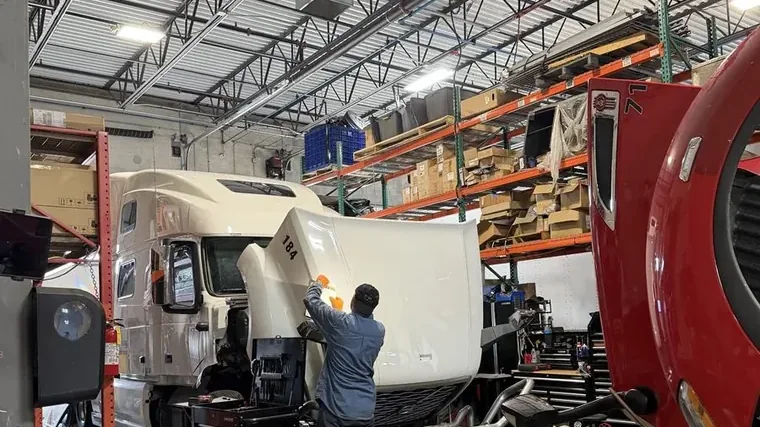
The truck is in the shop. Every day it is down is a day at zero. Who fixes it, how fast, and where, matters more to your annual income than four cents a mile.
When you ask about miles, ask what a driver in your position typically ran last month. Not the maximum anyone has ever run. The typical.
What lands on top of the mileage
Mileage pay is the body of the check. These are the lines that fill it out:
- Detention when a shipper or receiver holds you
- Stop pay on multi-stop loads
- Inspection bonuses for a clean DOT inspection
- Reimbursed travel for getting home and back
None of these turn a bad week into a good one. What they do is stop an ordinary week from quietly being worse than it looked.
What comes off the bottom
This is the part that rarely comes up on the first call:
- Escrow — a weekly holdback into an account you cannot spend
- A security or truck deposit, usually taken out of your first checks
- Chargebacks for wear, damage, or a late delivery that was not your fault
A driver comparing two offers on rate alone can pick the one that pays less, because the deductions were never in the comparison. What escrow really costs you in your first year puts numbers on that.
Gross minus what is held back is the figure to compare. Not the rate.
How to check any offer in ten minutes
- Ask for the rate and the typical weekly miles for your position.
- Multiply them. That is the honest headline.
- Ask what comes off the settlement, line by line, and when each one stops.
- Ask to see a real settlement — an actual document, names covered.
That last one separates carriers quickly. A company that pays well has settlements it does not mind you reading. A company that will not show you one has answered the question.
If you get a document, how to read a trucking settlement, line by line walks through every block of it and shows which lines to question.
Where we stand
Our drivers run up to $0.80 per mile, based on performance, time with the company and compliance — one rate, not a base with a stack of conditions bolted on. Freight is preplanned dry van across all 48 states, which is how a week reaches 3,500+ miles instead of drifting. A typical week lands between $2,500 and $3,500+, paid every week on a Tuesday-to-Monday pay period by direct deposit.
Nothing is held back. No escrow, no security deposit, no truck deposit, and no chargebacks for normal wear — damage you cause is yours up to the insurance deductible, no more and no less. Detention is paid at $25 an hour after the first two hours, up to $150 a day. Repairs happen in our own shop in East Dundee rather than in whatever bay you can find at midnight.
And you do not have to take any of that from us: we publish real weekly settlements on the main page, the actual documents with only names covered. Open one, find the mileage, find the rate, and do the multiplication yourself.
Driving for a carrier that holds nothing back
Up to $0.80 per mile, 3,500+ miles a week, paid every week. For drivers: no escrow, no deposit, and no chargebacks for normal wear and tear.